For some of us, a particular personality type comes to mind, which may have qualities in common with us, or may be the polar opposite! Some may see leadership as a logical and necessary role, such as in the way a conductor leads an orchestra, or a principal or head teacher leads a school.
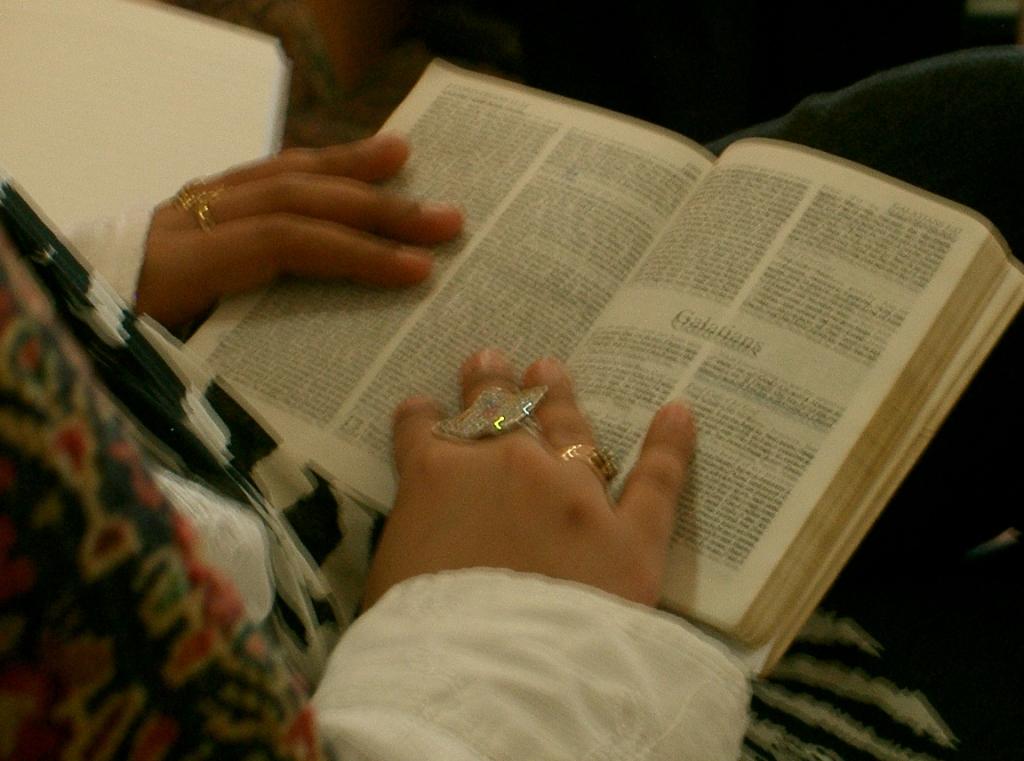
The aim of this lesson is to encourage the women among us who serve in the church as family group leaders or Bible discussion leaders, or some other kind of small group leaders. And to affirm that this role in the church is hugely significant – I’ve heard it said often that this role, for men as well as for women, is THE most significant in the church!
Without question it is God’s will for us to be fellow workers with God himself. Even as we acknowledge the great honour it is to be in partnership with God in some way, for example to strengthen and build up his people, we can easily feel afraid of responsibility. We can begin to take upon ourselves, or imagine taking upon ourselves, this burden. However, this was not what God ever intended. God bears the burden for his people and faithfully, generously, provides everything we need to do what he asks us to do – which is, put simply, to LOVE. And everyone can learn to show love.
This, I believe, is one of the best ways to describe the role of women leadership in the church: to take initiative in showing the love of God and the love of Christ to our sisters and brothers and to the world around us.
Though not everything that happens in the church happens at the family group or small group level, the most important things in church life happen here; and if they don’t happen here -- odds are, they’re not happening. This is, for example, the place where the lessons of most of the “one another” scriptures can be lived out most effectively.
Building God’s church
When we read the passage in 1 Corinthians 3:5-9, it helps us understand this role as God’s fellow workers as it shares that anyone can seek to build the church with God, not just the Paul’s and Apolloses of this world. Why? Because God is the one who makes things grow.
We are just servants who plant and water – God’s fellow workers. And who is supplying all that seed and water needed for the harvest? God! Truly, we are just servants, using the resources God himself provides. Our service to God is simply passing on what God has given to us (see Gloria Baird’s book, “God’s Pitcher” for a great discussion of this principle: http://www.dtodayarchive.org/content/view/690/44/). If Paul and Apollos are simply servants, no more – then who are we? Clearly, just servants, too.
Let’s look a little deeper at these resources God gives us as his fellow workers. The seed is analogous to the Word of God (Mark 4:14-20). This begins with us knowing the word well ourselves (2 Timothy 2:15) and as we learn, sowing the seed of the Word as much as possible by opening God’s word with one another, encouraging sisters to remain in the word in their own personal devotion to God, being involved in evangelistic Bible studies ourselves and calling other sisters to join us and do the same.
How are we doing in our own personal Bible study? Do the sisters around us have the conviction to be in the Word daily? Is daily Bible study a basic conviction in our lives and the lives of the women in the church around us as well as in the lives of our friends with whom we study the Bible to help them become disciples?
The second resource is water which in Scripture is often analogous to the Holy Spirit (John 4:13-14; Jeremiah 2:13; Revelations 22:17). Pouring out the gifts of God’s spirit on one other – love, joy, peace, patience, kindness, goodness, faithfulness, gentleness, and self-control – helps us to grow. Which of these are our strengths? Our weaknesses? Those that are strengths we should be pouring out in abundance on our fellow disciples! Those which are weaknesses we must make a commitment to get help and grow in order to turn our weaknesses into strengths.
Reading on in 1 Corinthians 3:10-15, Paul switches metaphors. He leaves the fields and the harvest behind and takes us to a construction site. What do you notice that is unusual about the building materials Paul discusses here? Building materials are expensive – even if we’re just talking about wood, or concrete. But who would choose to build a house with gold, or silver, or precious stones – outside of the precious stones used in ornamentation of the Taj Mahal or the onion domes of Russian Orthodoxy (which, by-the-way, are covered in gold in an effort to fulfill this very scripture). Gold is too soft, too precious – not to mention too tempting for thieves!
stones used in ornamentation of the Taj Mahal or the onion domes of Russian Orthodoxy (which, by-the-way, are covered in gold in an effort to fulfill this very scripture). Gold is too soft, too precious – not to mention too tempting for thieves! It seems Paul chose these things to teach us a truth that is very important for us to understand and accept: there is a fire of accountability coming for each person (verses 13-15). Whether or not we like it, we are all going to be held accountable for how we build. Some might protest, “In that case, I’m not going to build!” “I don’t need to lead!” Others might dare to say, “I refuse to serve!” or even “I refuse to love!”? Didn’t Jesus tell a parable about a servant who refused to use the talent (which in Greek is the same as the word “silver” in Matthew 25:18) that he was given?
The fact is that we all have God-given talents. And we will all face accountability on how we use (or don’t use) these talents. Therefore, shouldn’t we want to be doing everything possible to face that accountability?
Incidentally, the accountability in this 1 Corinthians passage is not about salvation; it isn’t about whether we will be saved or not. It’s about what kind of eternal significance will result from what we’ve spent our lives doing. As much as we can have proper, effective and respectful accountability with one another, we are doing each other a service, showing love for each other, trying to guarantee a better result for our lives.
Everyone is going to be tested by fire, by what we’ve built. There’s nothing said here about the one who chose to bury his talent, who doesn’t even try – he (or she) has already failed this test.
The fire of judgment day will test the quality of each person’s work, but the test of time does the same thing.
In the same way that metal rusts if left outside in the elements for years on end, a few minutes in a wood fire can make a piece of metal look the same way. A fire accomplishes the same chemical process of oxidation, only intensified and sped up. Our work – the quality of our building materials – will be tested by the fire of intense trials and also by the slow burn of the passage of time. In the end, it will become clear what kind of materials we used and what we were willing to invest in building God’s kingdom.
Wood, straw and hay burn easily. And when they burn, they are destroyed completely. Paul’s list of building materials, many have observed, seems to be in the order of increasing destructibility by fire. The Greek word for “hay” here is the same one translated as “grass” in
James 1:10-11 and 1 Peter 1:24 – “all flesh is like grass.” In what ways might we be building God’s house with grass – relying on our own human strength?
Gold, however, if it burns, is reusable. A wood fire will not destroy gold or silver. Some precious stones, burned in a fire, will crack. Others will be destroyed. Still others survive.
Let’s look at three materials – gold, silver, precious stones – and what happens when we build with each one. Please read along in your Bible as you continue this lesson.
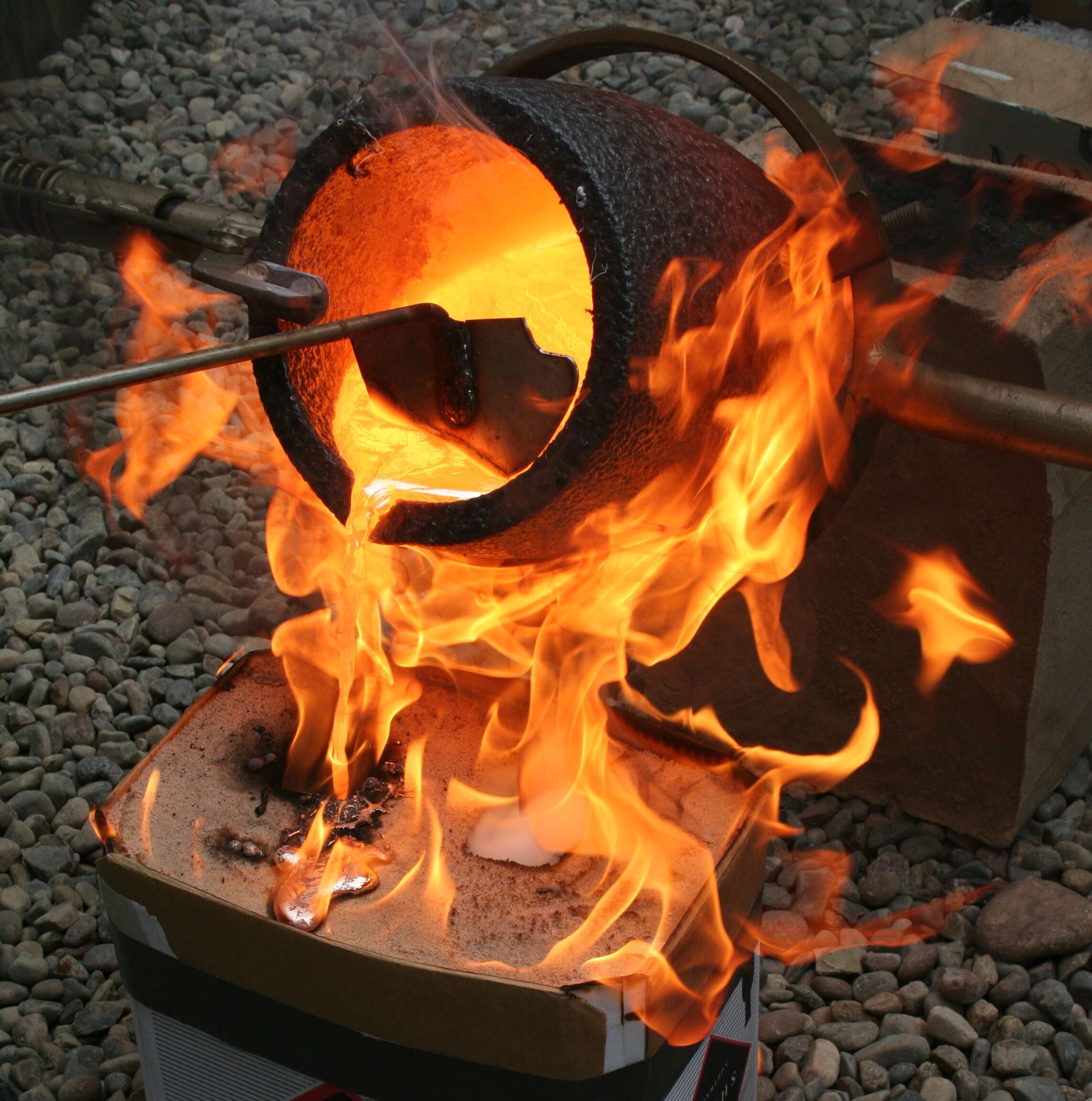
- 1 Peter 3:9 The refining of gold is compared with the testing of faith. Faith is the only human quality that has impressed God (Mark 6:6; Luke 7:9). We can be tempted to build on many things, such as principles or experience. How can we make sure we build with faith, including God in every aspect of our labour? How much are our small groups characterized by prayer? Are we making decisions to step out in faith, relying on God’s strength, or are we remaining “in control,” within our familiar comfort zone? What might be other examples of ways in which we rely on ourselves and not on God?
- Revelations 3:18-19 Jesus counsels us to buy from him gold refined in the fire. We must surrender something to Jesus in order to obtain his faith! What might this be – perhaps an opinion we hold dear? The pride of insecurity, or of self-confidence? (Which isn’t to say that we should not be confident; it is crucial, though, that our confidence is in God and not in ourselves. We desperately need this kind of godly confidence!)
- Romans 4:18-21 Start by facing the facts.
- 2 Peter 1:5-8 Focus on God’s promises – the fact that God is able. He has promised that we can be productive and effective in our knowledge of the Lord Jesus Christ.
- Romans 8:28 God has promised that all things work to the good of those who love him.
- Matthew 6:33 God has promised to take care of our physical needs if we seek his kingdom first
Building with silver is like building with our gifts
- Often in the Greek language, the word silver is synonymous with money (just like the French, argent). In the parable of the talents (Matthew 25, Luke 19), the talents are described as “money” or “silver.” We understand these talents to be the abilities and opportunities that God gives us – gifts from God.
- We know from experience as well as from scripture (1 Corinthians 14:4, 17) that when we put our strengths to work, it feels good. We get satisfaction from using our gifts. Often people appreciate us and encourage us when we do what we do well. It’s crucial that we learn to identify people’s gifts and encourage them to invest them in the church – otherwise people may feel more valued in the world than they do in the church. Generally, if we don’t put our gifts to work in the church, we will do it outside the church. Naturally, our hearts are drawn to the place where we get the most affirmation, validation, attention. Where our treasure is, our hearts will follow (Matthew 6:21).
- Recently a minister was sharing a story of a woman in his congregation who, up until very recently, had been fearful of trusting the leadership of the church – this minister, in particular! The minister asked her if she might possibly be interested in initiating some conversations with some of the teenagers and potential volunteer mentors in the group, to see if she might be able to offer some helpful insights about how best to match up the teens with adult mentors in the congregation. She agreed, did a fantastic job, returning the next week with an excel spreadsheet of suggested pairings based on her many conversations, and fairly skipped about the fellowship afterwards! Several people commented on her change in demeanor. This minister had found one of her untapped gifts and put it to work with wonderful results.
Building with precious stones is like building spiritual relationships
- Matthew 3:9 says God can raise up children out of stones; 1 Peter 2:5 tells us we are like living stones, being built into a spiritual house for God. Consider that building with precious stones teaches us about the qualities we must have in our relationships with one another.
- About forty years ago, when a thriving campus movement came to life, associated with the traditional churches of Christ in the USA, one of the most defining elements of the personality of that campus movement was emphasis on obedience to the 60 or so “one another” scriptures in the New Testament.
- The majority of the “one another” scriptures are imperative –- commands to be obeyed. The most common and well-repeated of these is the command to love one another, as in John 15:12.
- In our church here in Birmingham, UK, we have some older couples who have been friends and members together in this congregation for over 20 years, since the planting of the church. They have some striking differences in race, personality, upbringing, economic status, and nationality. My husband asked these brothers recently, why they believe they have such deep and lasting relationships. One brother replied, “it’s because we obeyed the Scriptures. That’s what gave us our friendship.” Often we make the mistake of thinking that friendship comes before obedience to the scriptures; but the truth is that obedience to the Scriptures is a sure foundation for godly, lasting relationships – the precious stones we long to build with.
- Cliques in the church are ungodly. I can think of about five people in the church to whom I regularly show kindness, and conclude that I am therefore a kind person. But I am not considering, then, the others whom I ignore. Think about the parable of the sheep and the goats in Matthew 25:31-46. The love I’ve shown to those who are hardest for me to love in the church, I have shown to Christ; the love I have withheld from them, I have also not shown toward Christ.
The tests of time and intense trials are bound to come. If we are God’s fellow workers – nothing can keep us from victory. Each of us needs to be careful how we build, devoting ourselves to building with faith, using our gifts from God, and investing wholeheartedly in spiritual relationships, loving one another as best we can, as Christ has loved us.
Adapted for “Women Today” from a lesson by Andy Fleming.
Please share your feedback, suggestions and requests for topics and/or submit your own article for this section.
Just e-mail Deanne, the Assistant Editor for the Women’s Today “Lessons for Leaders” page, at This email address is being protected from spambots. You need JavaScript enabled to view it.">This email address is being protected from spambots. You need JavaScript enabled to view it.