

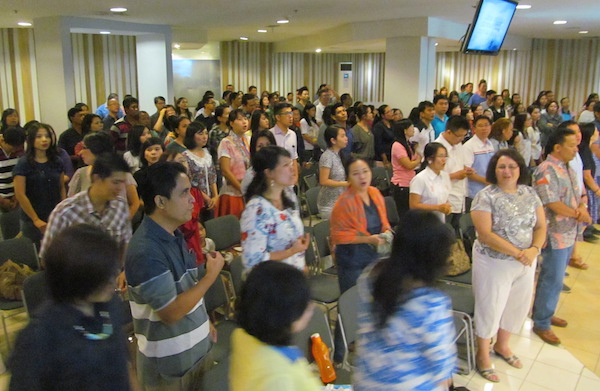
 Surabaya, Java June 25-29
We are met by our friends Sahat and Joyce on arrival in Jakarta. They lead a region of 300 in the southwest of Jakarta, in Tangerang. For now, we are just passing through Jakarta on our way to Surabaya. Surabaya is the second largest city in Indonesia. It is in the northeast of Java, with a population of about six million. It is famous in Indonesia as the center of the uprising against the Dutch in 1949 in the battle of Surabaya that led to independence from Dutch colonization. The name of the city means shark-crocodile.
Indonesia itself is a massive country, with 6000 inhabited islands, stretching farther than the distance from San Diego to the tip of Maine. Surabaya, like Jakarta, is on Java. Java is only the fifth largest of Indonesia’s islands, behind Sumatra, Borneo, New Guinea and Sulawesi, yet the population of this crowded island is more than 140 million out of a total of 252 million inhabitants in the country. The island is wall-to-wall rice-farming villages between the large cities such as Surabaya, Bandung, Jog Jakarta and Jakarta. The country is an interesting religious mixture. It is about 85% Muslim, making it the largest Muslim-majority country in the world (only India has more Muslims). However, it is officially a secular state, with significant minorities of Christians, especially in parts of Sumatra, New Guinea and Ambon and other islands, as well as a good number of Buddhists, mostly ethnic Chinese in the cities, and Hindus on Bali. Radicalized Islam is relatively rare in Indonesia, but there are regions such as Banda Aceh in northern Sumatra and in various cities across the country where sharia law is enforced. Christians are occasionally strongly persecuted, yet this I spotty and there is generally a relative peace and acceptance.