


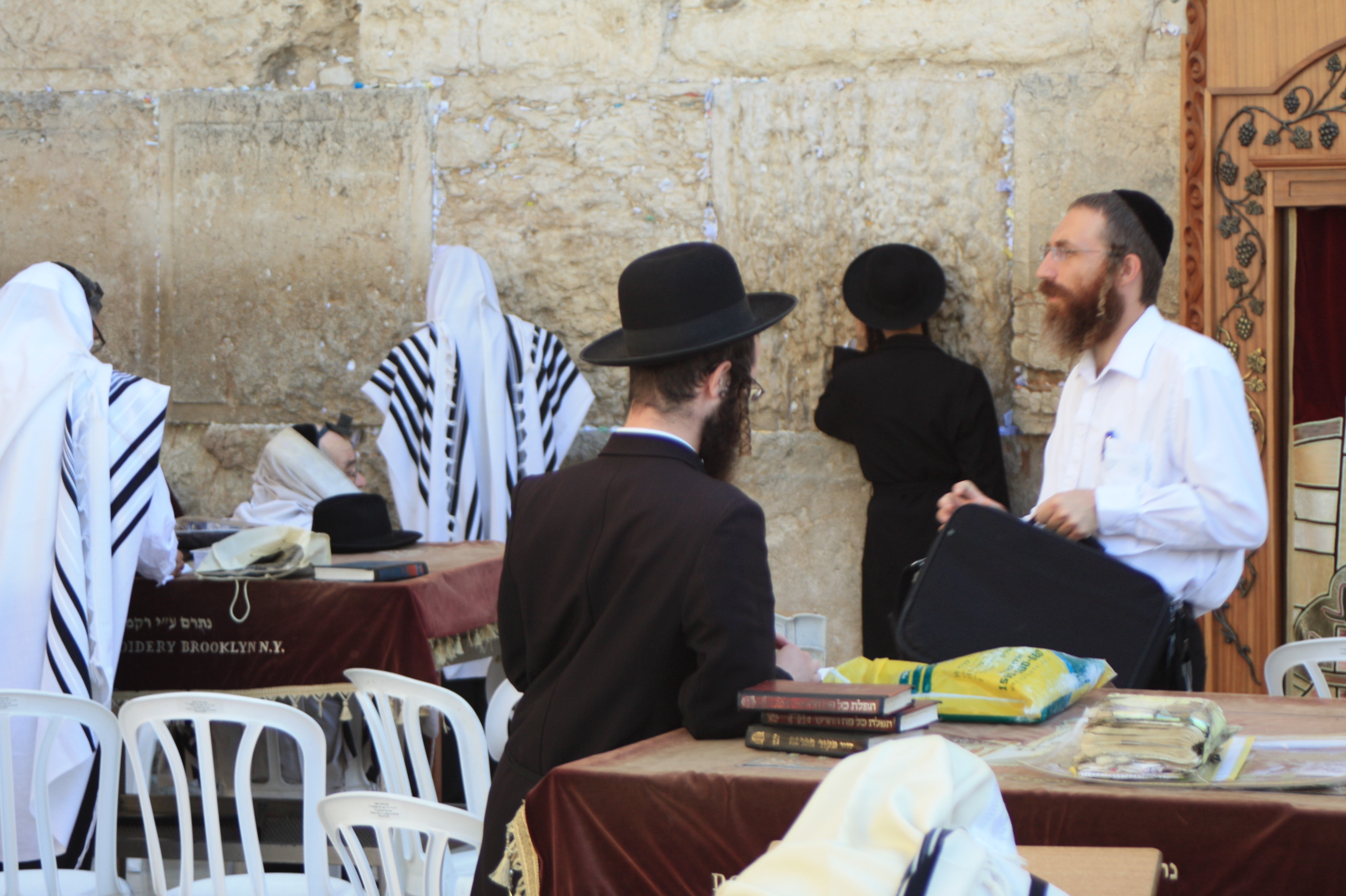
 The Western Wall is one of the few remaining parts of the actual wall that surrounded the Temple where the presence of God dwelt in the Holy of Holies. What a thrill it was for me to be able to physically see the Western Wall and touch it on the 2010 Steps of Jesus and the Apostles Tour.
In 70 AD much of Jerusalem and most of the Temple, built during the time of Herod the Great, was destroyed. Jesus' visits to that Temple are renowned as a baby, at Passover, remaining behind as a 12 year old speaking to the teachers and many encounters as an adult.
For generations, Israel, Jerusalem, the Temple Mount and these ruins have been a place of conflict as well as a place for prayers of mercy. It is said that Psalms 79 is frequently read at the Wall by Jews pleading for the destruction of their enemies and for the coming of the Messiah. On the actual Temple Mount, directly above this wall, is the third holiest site of the Muslim religion, the Dome on the Rock where Muslims believe that Mohammed ascended to heaven. Both areas are heavily guarded to maintain civil peace. Thankfully, this year, Israel and Palestine were considered safe enough for tourism. We were finally able to literally walk where Jesus and the Apostles walked.
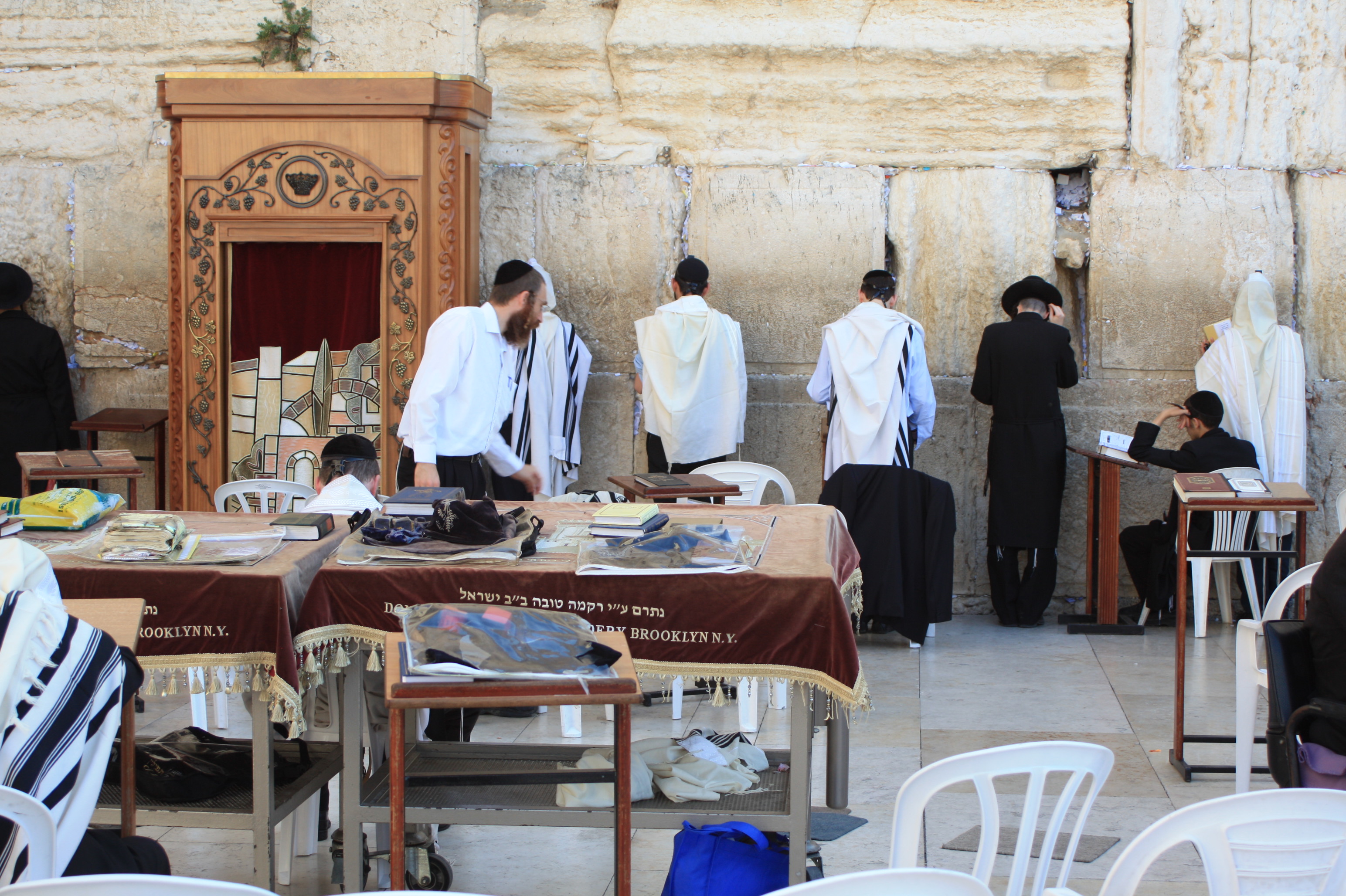 It is no wonder the Western Wall is called the Wailing Wall, revered by the Jews as the most sacred of places, because this wall signifies being in the presence of the Divine. Jews travel from around the world to pray here. They believe this is where they have the “ear” of God. People who cannot physically go to the Wall send written prayers to be placed in its ancient cracks.
Today, at the entrance of the wall, men and women are screened, scanned and separated. Just as in the early days, the men and women are not allowed in the same Temple area. A dividing wall of wood even separates families celebrating a son’s Bar Mitzvah.
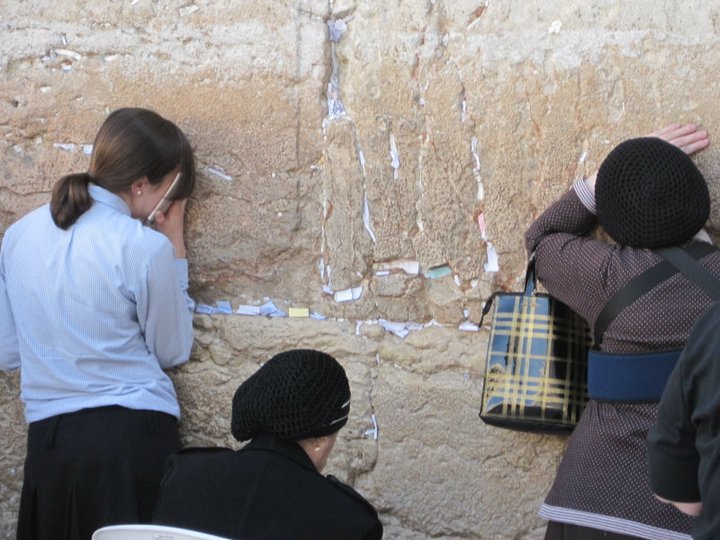 With heads’ covered, Jewish women cry and weave as they stand facing or touching the wall. Many read from prayer books or sit for hours under the shade of umbrellas. Some walk backwards away from the wall rather than turn their backs to “God”.
Praying at the wall was one of the many highlights for me on the Steps of Jesus and the Apostles Tour. We were all moved by our visit to the Garden Tomb and our Sunday worship on the Mount of Beatitudes overlooking the Sea of Galilee. These were far more than tourist sites. They were places of connection with my Lord.
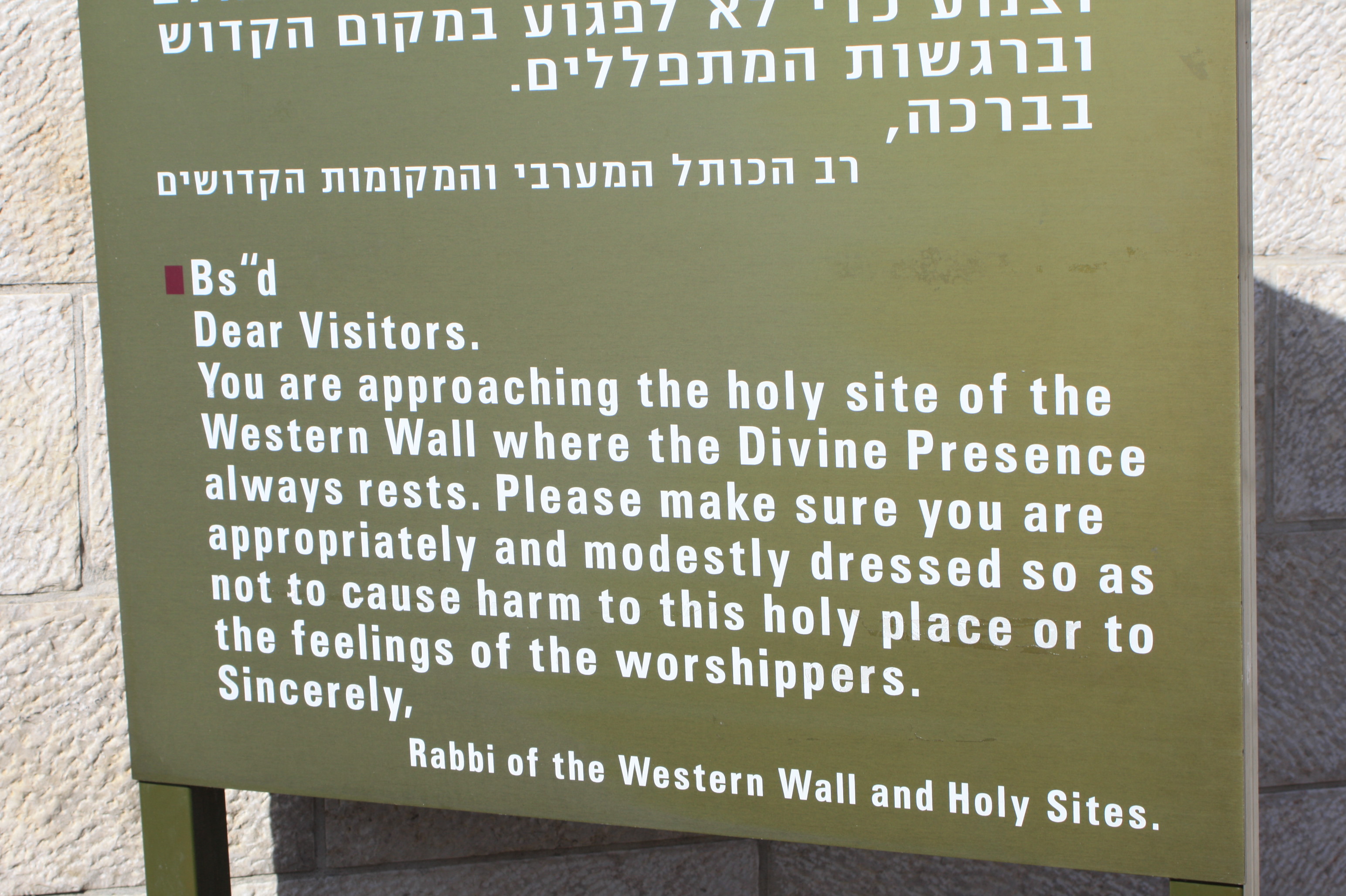 The disciples who were with us had many reactions too. One woman, who confessed she came on the trip emotionally and spiritually hardened, was weeping in humility at the reality of God’s biblical truths before her eyes. Another disciple wept in sadness for those who have little understanding or hope of a personal relationship with God. Everyone was touched by the atmosphere of respect and reverence of the area.
As I touched the wall and prayed, my mind was flooded with Scriptures that spoke of God’s purpose for the Temple and its long history.
I wondered what Jesus must have felt when he stood at the Temple. Surely on the days of atonement and other festivals, Jesus witnessed the blood flowing from the numerous animal sacrifices. Did he think of his own blood flowing down the streets of hardened stone? (Numbers 29) Did he wonder if his blood would turn hearts of stone into hearts of flesh? (Ezekiel 11:19)
I was moved by the thought of standing so close and touching a place where God’s Spirit dwelt those many years ago…then I was brought back to the spiritual reality! Even if I stood across the world from my home, wherever I am, I stand close to God because HE now dwells in me. I don’t have to approach a wall or travel miles to commune with Him. I am so grateful! (2 Corinthians 6:16)
While I stood at the Wall, I couldn’t help but notice a young Jewish mother reading to her very young daughters and trying to hold their attention. What did their young minds conceive of God as they looked at this old wall?
Excuse me while I do a little imagining. The year is 28 BC:
Child: Mommy, what is that big building?
Mother: Its’ the Temple, honey. Our Holy God dwells there.
Child: Can we go visit him?
Mother: Oh, no child only the High Priest can go to see him once a year.
Child: Can God come out and play with us?
Mother: No dear.
Child: Why, doesn’t he like us?
Love and closeness go together. Even as children we know that! I know I don’t like to feel separation of any kind from those I love.
Of course God’s desire from the time of creation was to be close to us, but our sin made the separation. (Isaiah 59:1-2) The sacrificial offering for our mercy and reconciliation with God is Jesus’ death, blood, burial and resurrection. God punctuated His desire for separation from his children to be end when the curtain of the Temple was torn from top to bottom at Jesus’ death. (Matthew 27:51) It was as if God was saying “No more separation!” “No more walls! “No more will I dwell behind this curtain!”
I had problems believing for years that I was worthy of God’s love and “nearness”. But when I finally accepted his incredible love and put my faith in what Jesus did to cleanse me of my sin, I was baptized to participate in the death, burial and resurrection and received the gift of the Holy Spirit. (Acts 2:36 – 38) I am now God’s temple. I don’t need to touch a wall or enter a special building to find Him.
What great motivation to keep my body and mind pure – to honor God who dwells in me! Do you not know that your bodies are temples of the Holy Spirit, who is in you, whom you have received from God? You are not your own; you were bought at a price. Therefore honor God with your bodies. 1 Corinthians 6:19-20
When I feel the need to experience the tangible presence of God, I will hug another child of God. According to Ephesians 2:22, “we too are being built together to become a dwelling in which God lives by his Spirit.” Yes, He is near, so very near.
Marcia Lamb
Click here to see the report on the 2010 Steps of Jesus and the Apostles Tour